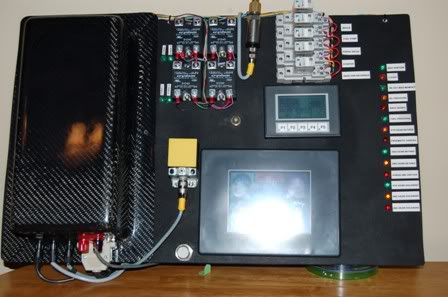
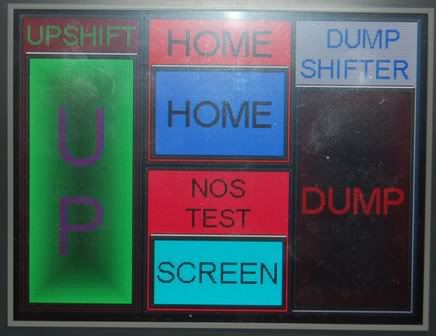
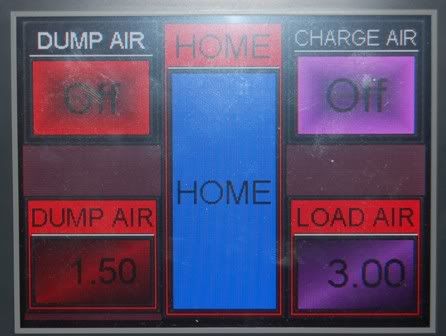
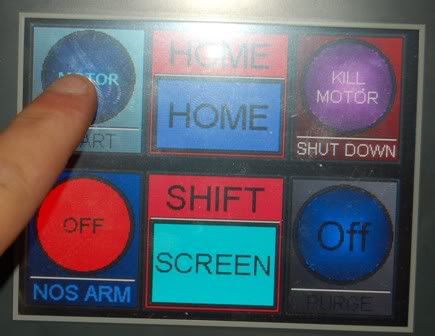
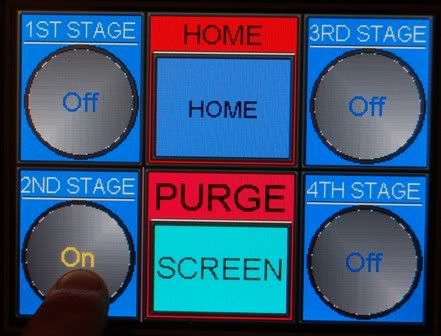
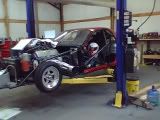
WITH THE ONE TOUCH START BUTTON IT STARTS THE CAR THEN THE FUEL PUMP, WATER PUMP, AND COOLING FANS ALL ON ITS ON. THEN THE TOUCH TO SHIFT MAKES BURNOUT FUN AGAIN. EVERY TIME THE CLUTCH IS COMPRESSED THE AIR DUMPS FROM THE PODS. THEN YOU TEST FIRE EACH NOS KIT AND HEAD TO THE AUTOMATIC PURGE. HERE YOU TOUCH ONE BUTTON AND THE BOTTLE PRESSURE WILL DROP TO YOUR DESIRED PRESSURE, EVER TIME. LAST YOU ARM THE NOS THIS TURNS ON A 2 STEP THE DATA RECORDER, RESETS THE MEMORY ON THE IGNITION BOX , AND DOES A SELF CHECK TO SEE IF THE SYSTEM IS RACE READY, THEN IF SO IT GIVES YOU A GREEN LED LIGHT THAT SAID LETS GO RACE. SO NO MORE OF THIS FORGETTING TO ARM THE NOS OR THE 2 STEP, OR FORGETTING THE FUEL PUMP OR THE COOLING ITS ALL DONE FOR YOU AND CHECKED. THEREFORE ALL YOU HAVE TO DO IS CUT A GOOD LIGHT AND WIN YOUR RACE.
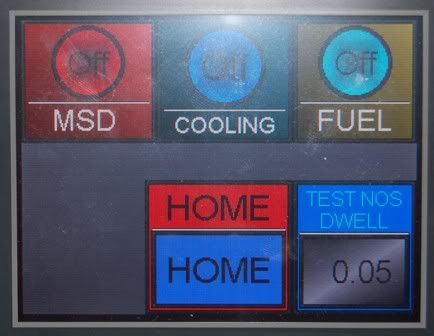
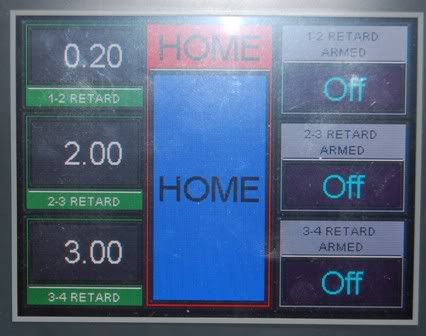
ON THE HOME SCREEN THERE ARE MANY OTHER FUNCTIONS THAT CAN BE TURNED ON OR OFF BETWEEN ROUND SUCH AS SHIFT TIMING RETARDS, ELECTRIC OR PNEUMATIC SHOCKS BOTH LOAD AND UNLOAD. YOU CAN SET THE DWELL TIME FOR THE TEST FIRE OF THE KITS. YOU CAN ALSO SET NOS TIMER TO LEAVE ON ONE KIT THEN TURN IT OFF AND REVERT TO ANOTHER AT THE SAME TIME. THE DIGITAL CLUTCH SENOR MAKE SETTING ACTIVATION POINT EASY JUST PUT THE DIAL INDICATOR IN THE CAN LET THE CLUTCH OUT TO WHERE YOU WANT IT AND HIT SET AND IT IS DONE! THERE ARE ALSO MANY OTHER FUNCTIONS THAT THE SYSTEM DOES FOR YOU, here is the link http://www.automatedracingtechnologies. ... module.htm